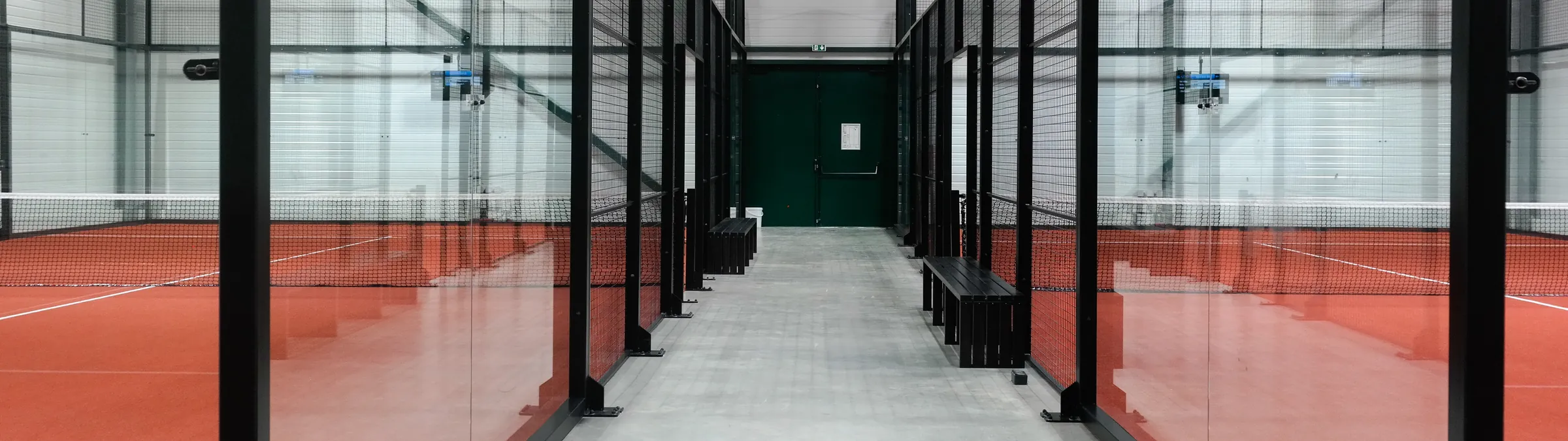
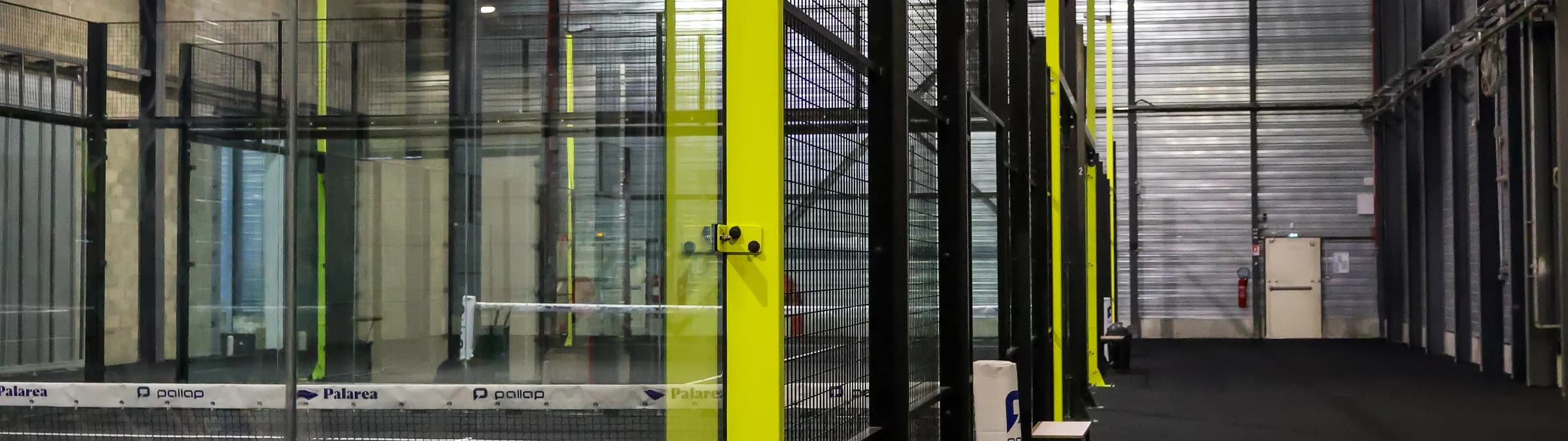
The court
- Galvanised steel structure
- 10 or 12 mm tempered glass
- Synthetic turf
- Net and posts
- LED lighting
- Shipping and installation
- Preventive and corrective maintenance
One contract, one point of contact, a price you know in advance.

Civil works and court supply are usually two suppliers blaming each other about the slab. We hold both, which is why the quote can separate them honestly instead of hiding one inside the other.

Soil study, setting out, and a layout that fits the plot rather than the brochure. This is where a conversion gets caught early: a slab poured for tennis was not designed for padel wind loading.
Excavation, reinforced slab, perimeter drainage, electrical routing. Priced line by line and paid at the start, separately from the court.
Frame, glass, mesh, turf, net, lighting. Four courts ship per 40-foot container, so multi-court projects save real money on freight.
Handover, playing-surface check against the FIP rules, and the complete as-built file. That date is what starts the warranty.
Priced one by one on your proposal, based on your site.
Eight items, each quoted separately and each visible on your proposal. Nothing is folded into the monthly, because the monthly covers the court and the court alone.
This separation is not a billing convenience. The court is equipment we lease to you; the slab and site works are works on your land. A quote that merges them stops you comparing anything.

Two settings, and you have your rent.
Galvanised steel frame, 10 mm tempered glass, 12 mm monofilament turf.
Estimate. Your quote depends on the site and on financing approval.
An address, a court count and a few photos.
Court rent and site works, clearly separated.
Review the terms. Plan the installation.
Not the question you had?
Tell us how many courts and where. You get a quote back, not a brochure.
No. A coordinated project still has two separate budgets: court rent and upfront site works. The proposal should state who handles surveys, permits, slab, drainage and power, plus the prerequisites for delivery and installation.
The court structure, glass, turf, net, lighting, shipping, installation and preventive and corrective maintenance. Groundworks, including the slab, drainage, power supply and permits, are quoted separately. Ask for both parts when comparing proposals.
Yes. An address, approximate dimensions and photos are enough to start a conversation. A final layout and quote require a site assessment. If you are still choosing premises, explain your shortlist and constraints.
No. It illustrates court rent using the current rate card. It does not assess ground conditions, permits or financing eligibility. The written proposal confirms the site-specific scope, separate upfront works and final terms.
Four jobs that are usually four suppliers. We hold all four, which is why nobody can point at somebody else when a date slips.
Site survey, civil works and installation, run and supervised by our own crews.
A long-term lease, with nothing to pay for the court at signing.
Opening events, tournaments and programming that put players on the courts from week one.
Preventive and corrective maintenance, plus rackets, balls and gear, for the whole term.
One contract, one point of contact, a price you know in advance.

Priced line by line. Paid when the work is done.
See the cost breakdown →Turf care, structural checks, lighting, wear parts. Every court is kept at playing standard throughout the lease period. No service agreement to negotiate on the side, and no line that appears in year three.
Hotel groups, open-air hospitality operators and padel clubs. The same offer behind a single court and behind a fleet spread over a dozen sites.


Also equipped Club Med · Accor, and independent clubs across Europe.
Tell us how many courts and where. You get a full quote, with court rent and groundwork shown separately, usually within one business day.